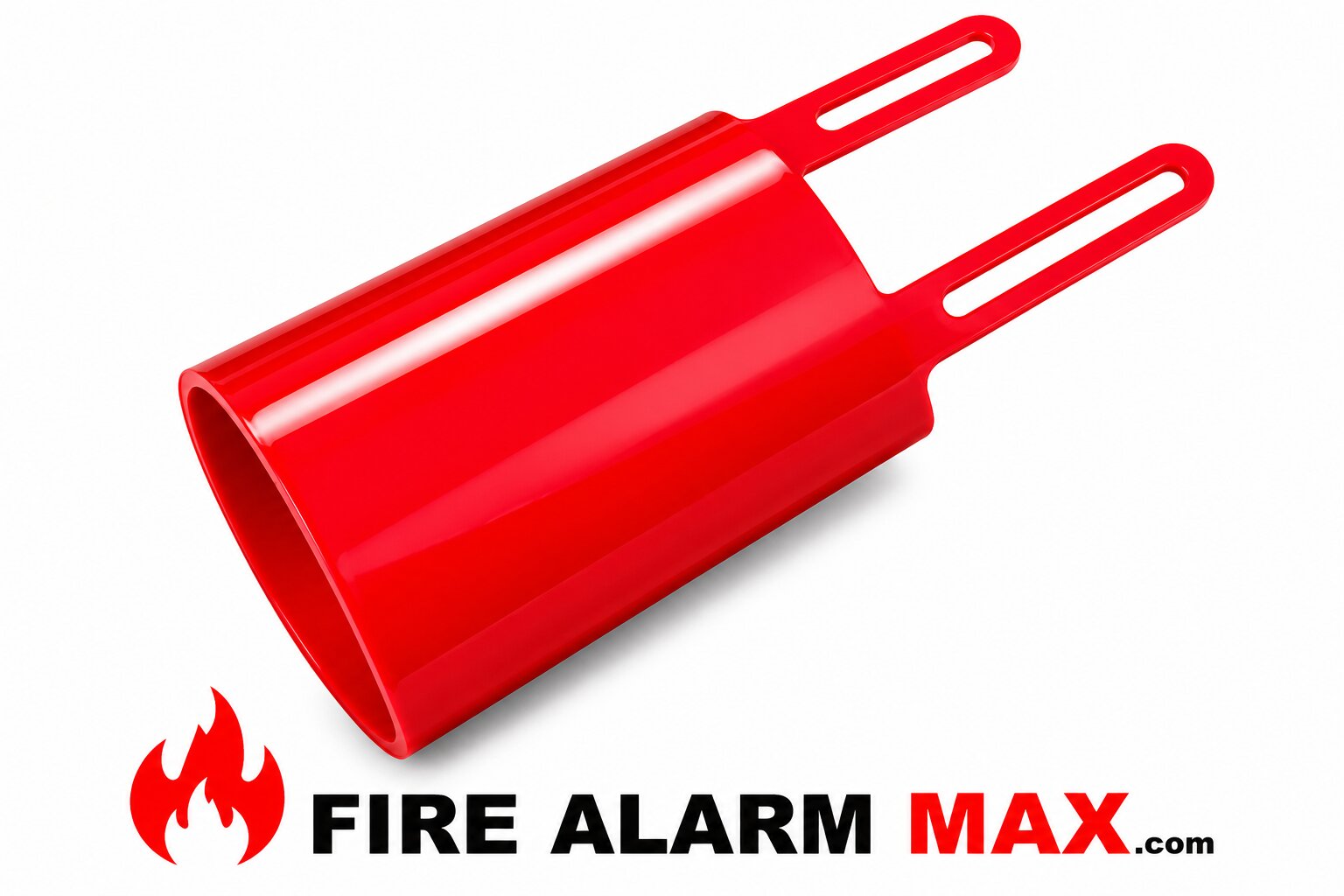
The Space Age DA-006 Field of View Restrictor is a precision accessory designed for use with Space Age D171 and D371 flame detectors. The Space Age DA-006 allows installers to selectively reduce the detector’s field of view, preventing unwanted detection of nearby flame sources, process flames, or other non-hazard areas. Therefore, it improves detection accuracy while reducing nuisance alarms in complex industrial environments.
The Space Age DA-006 is designed to restrict a portion of the flame detector’s optical viewing area without affecting its overall detection sensitivity. As a result, the detector can be focused on the specific hazard requiring protection while ignoring adjacent flame sources that could otherwise generate unwanted alarms. In addition, the restrictor provides a simple solution for installations where multiple flame sources exist within the detector’s normal field of view.
The DA-006 features an adjustable design capable of obscuring up to 60 degrees of the detector’s viewing angle. Consequently, installers can customize detector coverage to match the protected hazard area while blocking unwanted line-of-sight exposure. Moreover, up to three restrictors may be combined to reduce the detector’s effective field of view to approximately 30 degrees for highly targeted detection applications.
The Space Age DA-006 is specifically engineered for compatibility with D171 1IR+UV and D371 3IR+UV Multi-Spectrum Flame Detectors. As a result, the restrictor mounts securely to the detector’s rear support arms without requiring modifications to the detector itself. Additionally, the accessory preserves the detector’s optical performance while providing precise viewing angle control.
Industrial facilities frequently contain process flames, flare stacks, furnaces, welding operations, and other radiant energy sources that should not be monitored by a flame detector. Therefore, the DA-006 helps eliminate unwanted alarm conditions by blocking these non-protected areas from the detector’s field of view. Furthermore, limiting the viewing area improves overall system reliability without reducing the detector’s sensitivity to actual fire hazards.
The DA-006 mounts directly to the rear support arms of compatible flame detectors for quick installation and adjustment. Consequently, installers can fine-tune the detector’s coverage during commissioning without specialized tools or complicated modifications. Additionally, the adjustable design allows future field-of-view changes if facility layouts or hazard areas are modified.
The Space Age DA-006 Field of View Restrictor is ideal for:
The Space Age DA-006 Field of View Restrictor combines adjustable viewing angle control, simple installation, and rugged industrial performance in a compact accessory for Space Age flame detectors. Overall, it improves flame detector accuracy by focusing detection on critical hazard areas while minimizing nuisance alarms caused by adjacent flame sources or industrial processes.
| Weight | 2 lbs |
|---|---|
| Dimensions | 6 × 6 × 4 in |
Your Payment information is processed securely. We do not store credit card details, nor have access to your credit card information.
Orders ship same day
Thousands of parts in stock
Reliable products & service
Order anytime, anywhere
The Space Age DA-006 Field of View Restrictor is a precision accessory designed for use with Space Age D171 and D371 flame detectors. The Space Age DA-006 allows installers to selectively reduce the detector’s field of view, preventing unwanted detection of nearby flame sources, process flames, or other non-hazard areas. Therefore, it improves detection accuracy while reducing nuisance alarms in complex industrial environments.
The Space Age DA-006 is designed to restrict a portion of the flame detector’s optical viewing area without affecting its overall detection sensitivity. As a result, the detector can be focused on the specific hazard requiring protection while ignoring adjacent flame sources that could otherwise generate unwanted alarms. In addition, the restrictor provides a simple solution for installations where multiple flame sources exist within the detector’s normal field of view.
The DA-006 features an adjustable design capable of obscuring up to 60 degrees of the detector’s viewing angle. Consequently, installers can customize detector coverage to match the protected hazard area while blocking unwanted line-of-sight exposure. Moreover, up to three restrictors may be combined to reduce the detector’s effective field of view to approximately 30 degrees for highly targeted detection applications.
The Space Age DA-006 is specifically engineered for compatibility with D171 1IR+UV and D371 3IR+UV Multi-Spectrum Flame Detectors. As a result, the restrictor mounts securely to the detector’s rear support arms without requiring modifications to the detector itself. Additionally, the accessory preserves the detector’s optical performance while providing precise viewing angle control.
Industrial facilities frequently contain process flames, flare stacks, furnaces, welding operations, and other radiant energy sources that should not be monitored by a flame detector. Therefore, the DA-006 helps eliminate unwanted alarm conditions by blocking these non-protected areas from the detector’s field of view. Furthermore, limiting the viewing area improves overall system reliability without reducing the detector’s sensitivity to actual fire hazards.
The DA-006 mounts directly to the rear support arms of compatible flame detectors for quick installation and adjustment. Consequently, installers can fine-tune the detector’s coverage during commissioning without specialized tools or complicated modifications. Additionally, the adjustable design allows future field-of-view changes if facility layouts or hazard areas are modified.
The Space Age DA-006 Field of View Restrictor is ideal for:
The Space Age DA-006 Field of View Restrictor combines adjustable viewing angle control, simple installation, and rugged industrial performance in a compact accessory for Space Age flame detectors. Overall, it improves flame detector accuracy by focusing detection on critical hazard areas while minimizing nuisance alarms caused by adjacent flame sources or industrial processes.
| Weight | 2 lbs |
|---|---|
| Dimensions | 6 × 6 × 4 in |
Your Payment information is processed securely. We do not store credit card details, nor have access to your credit card information.



Select at least 2 products
to compare