
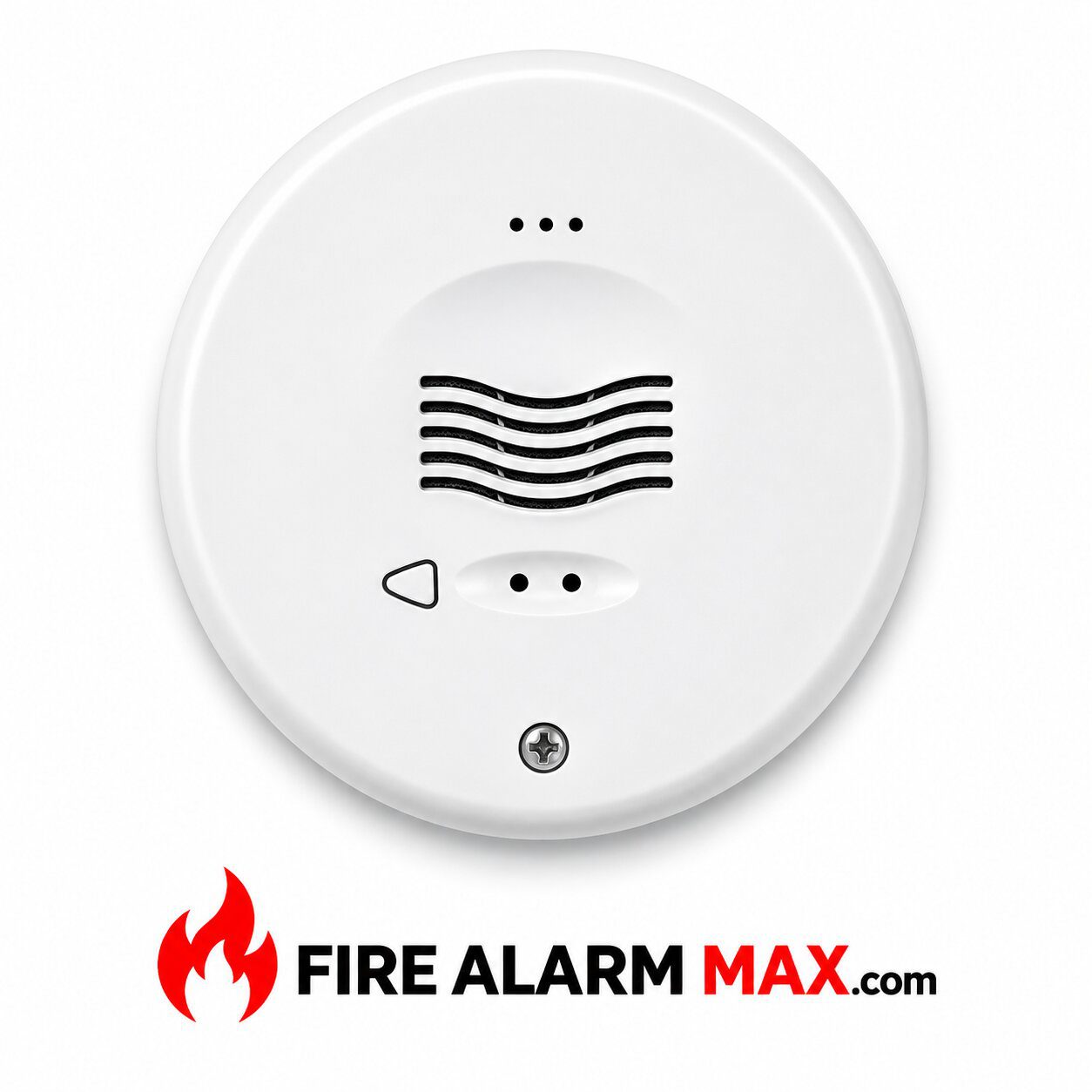
System Sensor CO1224TR Round Carbon Monoxide Detector with RealTest Technology
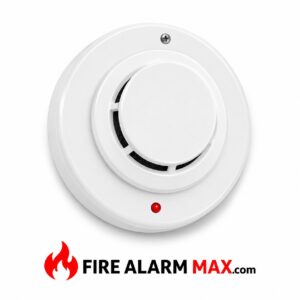
The System Sensor CO1224TR is a round, system-connected carbon monoxide detector designed for compatible fire alarm and security systems. It uses electrochemical sensing technology to monitor carbon monoxide gas and provide warning when hazardous concentrations are detected.
Additionally, the detector features RealTest technology, a local audible sounder, and dedicated alarm and trouble relay contacts. Furthermore, its round housing, dual LED indicators, and Test/Hush button support professional installation and maintenance.
Therefore, the CO1224TR provides a supervised CO detection solution for approved indoor applications.
Advanced Electrochemical Carbon Monoxide Sensing
The System Sensor CO1224TR uses an electrochemical sensing cell to monitor carbon monoxide gas.
Unlike optical fire detectors, this device responds to carbon monoxide concentrations rather than airborne combustion particles.
During normal operation, the sensing cell continuously evaluates the surrounding air. Meanwhile, the detector electronics monitor the cell’s response.
When the detected CO concentration meets the applicable alarm criteria, the detector initiates an alarm condition.
As a result, the local sounder activates and the alarm relay changes state.
Additionally, the connected control panel can receive the alarm signal through the approved wiring arrangement.
Therefore, the CO1224TR provides both local warning and system-connected monitoring.
System-Connected Carbon Monoxide Detection
The CO1224TR is designed for connection to compatible control equipment.
Specifically, it uses a six-wire, system-monitored arrangement that includes power and separate alarm and trouble connections.
Additionally, its relay outputs allow the control panel to distinguish alarm conditions from certain equipment faults.
As a result, the system can report important CO detection information.
Furthermore, the dedicated trouble relay supports required supervision of the sensing cell.
However, the CO1224TR is not an independently addressable signaling-line-circuit device.
Therefore, installers must verify the control panel, power supply, and input circuit requirements.
RealTest Functional Testing Technology
The detector incorporates System Sensor RealTest technology.
Unlike a simple electronic test that checks only selected circuit functions, RealTest allows technicians to verify the response of the electrochemical CO sensing cell.
First, qualified personnel activate RealTest mode using the Test/Hush button.
Next, they apply an approved canned CO test agent according to the manufacturer’s instructions.
As a result, the detector responds to CO entering the sensing cell.
Additionally, technicians can verify the resulting alarm indication and control panel response.
However, RealTest must be performed with the correct test agent and approved procedure.
Therefore, the manufacturer instructions should guide all functional testing.
Integrated Audible Alarm Sounder
The CO1224TR includes a local audible sounder.
Specifically, the manufacturer specifies a minimum sound output of 85 dBA at 10 feet during alarm.
Additionally, the sounder uses a temporal-four alarm pattern associated with carbon monoxide notification.
As a result, occupants can receive a recognizable local audible warning.
Furthermore, the red LED flashes in a corresponding alarm pattern.
However, the complete system’s notification requirements depend on the approved design and applicable codes.
Therefore, technicians must verify the installed notification arrangement.
Dedicated Form C Alarm Relay
The CO1224TR includes a Form C alarm relay.
Specifically, the manufacturer rates the alarm contacts at 0.5 amps at 30 VDC.
During a CO alarm condition, the relay changes state to communicate the event to connected equipment.
Additionally, the Form C arrangement provides normally open and normally closed contact options.
As a result, installers can select the approved wiring configuration.
However, the relay contacts must not be used beyond their published electrical rating.
Therefore, technicians must verify the connected circuit before installation.
Dedicated Form A Trouble Relay
The detector includes a separate Form A trouble relay.
Additionally, the manufacturer rates the trouble contacts at 0.5 amps at 30 VDC.
This relay provides supervision for conditions such as sensing-cell failure and end-of-life.
Consequently, the connected control panel can receive a trouble signal when the detector requires replacement.
Furthermore, the manufacturer identifies this supervision as a requirement under UL 2075.
However, a trouble condition should not be treated as an ordinary CO alarm.
Therefore, installers must wire and program the trouble circuit correctly.
Ten-Year CO Sensor End-of-Life Timer
The CO1224TR incorporates an end-of-life timer.
Specifically, the manufacturer identifies an approximate service life of 10 years from manufacture.
When the CO sensing cell reaches its end-of-life condition, the detector activates its trouble output.
Additionally, a replacement date label is located inside the detector cover.
As a result, technicians can verify the scheduled replacement date during inspection.
However, the detector may require replacement earlier if the sensing cell reports a fault.
Therefore, buyers should always inspect the actual manufacturing and replacement information.
Test/Hush Button
The detector includes an accessible Test/Hush button.
During routine maintenance, qualified personnel can use this button to initiate the supported alarm test.
Additionally, the button provides access to RealTest mode.
Meanwhile, the Hush function can silence the local sounder for approximately five minutes under permitted conditions.
However, the Hush function does not operate at CO concentrations above 350 parts per million.
Therefore, the button should not be treated as a way to override a hazardous CO condition.
Dual LED Status Indicators
The CO1224TR includes green and red LED status indication.
During normal operation, the green LED flashes approximately once per minute.
Meanwhile, the red LED remains off.
When a CO alarm occurs, the red LED flashes in the temporal-four pattern.
Additionally, the detector uses different indications for RealTest and CO trouble conditions.
As a result, technicians can distinguish several operating states during inspection.
However, some end-of-life and power-loss conditions do not produce a local audible warning.
Therefore, the trouble relay must be connected and supervised correctly.
Key Features
Round Housing Design
The CO1224TR features a round housing measuring approximately 6 inches in diameter.
Additionally, its low-profile construction supports approved wall and ceiling installations.
The housing is designed for ordinary indoor locations.
As a result, installers can position the detector according to the approved CO protection design.
Furthermore, the round shape provides a different appearance from the rectangular CO1224T.
However, physical appearance does not determine detector placement.
Therefore, technicians must follow the manufacturer’s mounting and location requirements.
Flexible Mounting Options
The detector supports installation on a single-gang electrical box.
Additionally, the manufacturer permits direct surface mounting to a suitable wall or ceiling.
As a result, installers can select an approved mounting arrangement for the building.
Furthermore, the manufacturer identifies optional drywall anchors in its installation documentation.
However, the actual package contents should be checked before advertising included mounting hardware.
Therefore, sellers should disclose whether any accessories are missing.
SEMS Wiring Terminals
The CO1224TR incorporates SEMS screw wiring terminals.
Additionally, the terminals accept 14–22 AWG conductors.
As a result, qualified installers can connect the required power, alarm, and trouble wiring.
Furthermore, the six-wire arrangement supports separate supervision of CO alarm and equipment trouble conditions.
However, wiring must follow the manufacturer’s diagrams and the connected panel’s requirements.
Therefore, installers should verify circuit supervision before commissioning.
Low-Current Electrical Operation
The detector operates from a nominal 12 or 24 VDC power source.
Specifically, the manufacturer identifies an allowable voltage range of 10 to 33 VDC.
Additionally, average standby current is 20 mA.
Meanwhile, maximum alarm current is 40 mA, with a published test current of 75 mA.
Therefore, installers must account for the correct electrical requirements when sizing the power supply.
Furthermore, the alarm and trouble relay contacts have separate electrical ratings.
Consequently, technicians must verify the complete system design.
Environmental Operating Requirements
The CO1224TR operates in ambient temperatures from 32°F to 104°F (0°C to 40°C).
Additionally, the manufacturer specifies relative humidity from 22% to 90%.
The detector is intended for ordinary indoor environments.
Therefore, technicians should verify that the selected installation location meets these conditions.
However, the unit is not identified as a weatherproof or industrial gas-monitoring instrument.
Consequently, it should not be installed in unsuitable environments.
Typical Applications
The System Sensor CO1224TR supports approved indoor carbon monoxide detection installations.
For example, applications may include residential buildings, apartments, hotels, and other occupancies where a compatible system-connected CO detector is specified.
Additionally, the dedicated trouble relay supports integration with monitored control equipment.
Furthermore, the local sounder provides audible notification at the detector.
However, installation locations and coverage requirements depend on applicable codes.
Therefore, qualified professionals must follow the approved system design.
Installation and Compatibility
Before installation, technicians should verify the control panel, power supply, and relay input requirements.
Next, they should inspect the detector housing, sensing cell, and wiring terminals.
Additionally, installers must check the manufacturing date and internal replacement label.
Qualified professionals should install the detector according to System Sensor instructions.
Afterward, they must verify CO alarm signaling, trouble supervision, and the local sounder.
Therefore, the detector should enter service only after successful commissioning.
Maintenance and Functional Testing
Regular maintenance helps preserve dependable CO detection performance.
First, technicians should inspect the housing and sensing openings for damage or contamination.
Next, they should verify the power supply and control panel connections.
Additionally, they should perform approved Test/Hush and RealTest procedures.
Furthermore, the trouble relay and end-of-life supervision should be checked.
However, a successful electronic test does not automatically establish the remaining life of the CO sensing cell.
Therefore, technicians must also inspect the replacement date.
Important Replacement Requirements
The CO1224TR’s sensing cell has a finite service life.
Consequently, an expired detector must be replaced rather than returned to active service.
Additionally, the manufacturer requires replacement when the sensing cell reports a trouble condition.
For example, a detector manufactured in 2017 would reach approximately ten years of age in 2027, subject to the actual replacement label.
However, unused inventory continues to age after manufacture.
Therefore, sellers should not describe older stock as having a fresh ten-year service life.
Conclusion
Overall, the System Sensor CO1224TR provides supervised electrochemical carbon monoxide detection for compatible fire alarm and security systems.
Additionally, its RealTest technology, local sounder, Form C alarm relay, and Form A trouble relay support professional installation and maintenance.
Furthermore, its round housing and flexible mounting options accommodate approved indoor applications.
Therefore, the CO1224TR is suitable for compatible systems only when its replacement date, sensing-cell condition, electrical requirements, and safety markings have been verified.
| Weight | 1 lbs |
|---|---|
| Dimensions | 6 × 6 × 6 in |
| Brand |
Your Payment information is processed securely. We do not store credit card details, nor have access to your credit card information.
Orders ship same day
Thousands of parts in stock
Reliable products & service
Order anytime, anywhere
System Sensor CO1224TR Round Carbon Monoxide Detector with RealTest Technology
The System Sensor CO1224TR is a round, system-connected carbon monoxide detector designed for compatible fire alarm and security systems. It uses electrochemical sensing technology to monitor carbon monoxide gas and provide warning when hazardous concentrations are detected.
Additionally, the detector features RealTest technology, a local audible sounder, and dedicated alarm and trouble relay contacts. Furthermore, its round housing, dual LED indicators, and Test/Hush button support professional installation and maintenance.
Therefore, the CO1224TR provides a supervised CO detection solution for approved indoor applications.
Advanced Electrochemical Carbon Monoxide Sensing
The System Sensor CO1224TR uses an electrochemical sensing cell to monitor carbon monoxide gas.
Unlike optical fire detectors, this device responds to carbon monoxide concentrations rather than airborne combustion particles.
During normal operation, the sensing cell continuously evaluates the surrounding air. Meanwhile, the detector electronics monitor the cell’s response.
When the detected CO concentration meets the applicable alarm criteria, the detector initiates an alarm condition.
As a result, the local sounder activates and the alarm relay changes state.
Additionally, the connected control panel can receive the alarm signal through the approved wiring arrangement.
Therefore, the CO1224TR provides both local warning and system-connected monitoring.
System-Connected Carbon Monoxide Detection
The CO1224TR is designed for connection to compatible control equipment.
Specifically, it uses a six-wire, system-monitored arrangement that includes power and separate alarm and trouble connections.
Additionally, its relay outputs allow the control panel to distinguish alarm conditions from certain equipment faults.
As a result, the system can report important CO detection information.
Furthermore, the dedicated trouble relay supports required supervision of the sensing cell.
However, the CO1224TR is not an independently addressable signaling-line-circuit device.
Therefore, installers must verify the control panel, power supply, and input circuit requirements.
RealTest Functional Testing Technology
The detector incorporates System Sensor RealTest technology.
Unlike a simple electronic test that checks only selected circuit functions, RealTest allows technicians to verify the response of the electrochemical CO sensing cell.
First, qualified personnel activate RealTest mode using the Test/Hush button.
Next, they apply an approved canned CO test agent according to the manufacturer’s instructions.
As a result, the detector responds to CO entering the sensing cell.
Additionally, technicians can verify the resulting alarm indication and control panel response.
However, RealTest must be performed with the correct test agent and approved procedure.
Therefore, the manufacturer instructions should guide all functional testing.
Integrated Audible Alarm Sounder
The CO1224TR includes a local audible sounder.
Specifically, the manufacturer specifies a minimum sound output of 85 dBA at 10 feet during alarm.
Additionally, the sounder uses a temporal-four alarm pattern associated with carbon monoxide notification.
As a result, occupants can receive a recognizable local audible warning.
Furthermore, the red LED flashes in a corresponding alarm pattern.
However, the complete system’s notification requirements depend on the approved design and applicable codes.
Therefore, technicians must verify the installed notification arrangement.
Dedicated Form C Alarm Relay
The CO1224TR includes a Form C alarm relay.
Specifically, the manufacturer rates the alarm contacts at 0.5 amps at 30 VDC.
During a CO alarm condition, the relay changes state to communicate the event to connected equipment.
Additionally, the Form C arrangement provides normally open and normally closed contact options.
As a result, installers can select the approved wiring configuration.
However, the relay contacts must not be used beyond their published electrical rating.
Therefore, technicians must verify the connected circuit before installation.
Dedicated Form A Trouble Relay
The detector includes a separate Form A trouble relay.
Additionally, the manufacturer rates the trouble contacts at 0.5 amps at 30 VDC.
This relay provides supervision for conditions such as sensing-cell failure and end-of-life.
Consequently, the connected control panel can receive a trouble signal when the detector requires replacement.
Furthermore, the manufacturer identifies this supervision as a requirement under UL 2075.
However, a trouble condition should not be treated as an ordinary CO alarm.
Therefore, installers must wire and program the trouble circuit correctly.
Ten-Year CO Sensor End-of-Life Timer
The CO1224TR incorporates an end-of-life timer.
Specifically, the manufacturer identifies an approximate service life of 10 years from manufacture.
When the CO sensing cell reaches its end-of-life condition, the detector activates its trouble output.
Additionally, a replacement date label is located inside the detector cover.
As a result, technicians can verify the scheduled replacement date during inspection.
However, the detector may require replacement earlier if the sensing cell reports a fault.
Therefore, buyers should always inspect the actual manufacturing and replacement information.
Test/Hush Button
The detector includes an accessible Test/Hush button.
During routine maintenance, qualified personnel can use this button to initiate the supported alarm test.
Additionally, the button provides access to RealTest mode.
Meanwhile, the Hush function can silence the local sounder for approximately five minutes under permitted conditions.
However, the Hush function does not operate at CO concentrations above 350 parts per million.
Therefore, the button should not be treated as a way to override a hazardous CO condition.
Dual LED Status Indicators
The CO1224TR includes green and red LED status indication.
During normal operation, the green LED flashes approximately once per minute.
Meanwhile, the red LED remains off.
When a CO alarm occurs, the red LED flashes in the temporal-four pattern.
Additionally, the detector uses different indications for RealTest and CO trouble conditions.
As a result, technicians can distinguish several operating states during inspection.
However, some end-of-life and power-loss conditions do not produce a local audible warning.
Therefore, the trouble relay must be connected and supervised correctly.
Key Features
Round Housing Design
The CO1224TR features a round housing measuring approximately 6 inches in diameter.
Additionally, its low-profile construction supports approved wall and ceiling installations.
The housing is designed for ordinary indoor locations.
As a result, installers can position the detector according to the approved CO protection design.
Furthermore, the round shape provides a different appearance from the rectangular CO1224T.
However, physical appearance does not determine detector placement.
Therefore, technicians must follow the manufacturer’s mounting and location requirements.
Flexible Mounting Options
The detector supports installation on a single-gang electrical box.
Additionally, the manufacturer permits direct surface mounting to a suitable wall or ceiling.
As a result, installers can select an approved mounting arrangement for the building.
Furthermore, the manufacturer identifies optional drywall anchors in its installation documentation.
However, the actual package contents should be checked before advertising included mounting hardware.
Therefore, sellers should disclose whether any accessories are missing.
SEMS Wiring Terminals
The CO1224TR incorporates SEMS screw wiring terminals.
Additionally, the terminals accept 14–22 AWG conductors.
As a result, qualified installers can connect the required power, alarm, and trouble wiring.
Furthermore, the six-wire arrangement supports separate supervision of CO alarm and equipment trouble conditions.
However, wiring must follow the manufacturer’s diagrams and the connected panel’s requirements.
Therefore, installers should verify circuit supervision before commissioning.
Low-Current Electrical Operation
The detector operates from a nominal 12 or 24 VDC power source.
Specifically, the manufacturer identifies an allowable voltage range of 10 to 33 VDC.
Additionally, average standby current is 20 mA.
Meanwhile, maximum alarm current is 40 mA, with a published test current of 75 mA.
Therefore, installers must account for the correct electrical requirements when sizing the power supply.
Furthermore, the alarm and trouble relay contacts have separate electrical ratings.
Consequently, technicians must verify the complete system design.
Environmental Operating Requirements
The CO1224TR operates in ambient temperatures from 32°F to 104°F (0°C to 40°C).
Additionally, the manufacturer specifies relative humidity from 22% to 90%.
The detector is intended for ordinary indoor environments.
Therefore, technicians should verify that the selected installation location meets these conditions.
However, the unit is not identified as a weatherproof or industrial gas-monitoring instrument.
Consequently, it should not be installed in unsuitable environments.
Typical Applications
The System Sensor CO1224TR supports approved indoor carbon monoxide detection installations.
For example, applications may include residential buildings, apartments, hotels, and other occupancies where a compatible system-connected CO detector is specified.
Additionally, the dedicated trouble relay supports integration with monitored control equipment.
Furthermore, the local sounder provides audible notification at the detector.
However, installation locations and coverage requirements depend on applicable codes.
Therefore, qualified professionals must follow the approved system design.
Installation and Compatibility
Before installation, technicians should verify the control panel, power supply, and relay input requirements.
Next, they should inspect the detector housing, sensing cell, and wiring terminals.
Additionally, installers must check the manufacturing date and internal replacement label.
Qualified professionals should install the detector according to System Sensor instructions.
Afterward, they must verify CO alarm signaling, trouble supervision, and the local sounder.
Therefore, the detector should enter service only after successful commissioning.
Maintenance and Functional Testing
Regular maintenance helps preserve dependable CO detection performance.
First, technicians should inspect the housing and sensing openings for damage or contamination.
Next, they should verify the power supply and control panel connections.
Additionally, they should perform approved Test/Hush and RealTest procedures.
Furthermore, the trouble relay and end-of-life supervision should be checked.
However, a successful electronic test does not automatically establish the remaining life of the CO sensing cell.
Therefore, technicians must also inspect the replacement date.
Important Replacement Requirements
The CO1224TR’s sensing cell has a finite service life.
Consequently, an expired detector must be replaced rather than returned to active service.
Additionally, the manufacturer requires replacement when the sensing cell reports a trouble condition.
For example, a detector manufactured in 2017 would reach approximately ten years of age in 2027, subject to the actual replacement label.
However, unused inventory continues to age after manufacture.
Therefore, sellers should not describe older stock as having a fresh ten-year service life.
Conclusion
Overall, the System Sensor CO1224TR provides supervised electrochemical carbon monoxide detection for compatible fire alarm and security systems.
Additionally, its RealTest technology, local sounder, Form C alarm relay, and Form A trouble relay support professional installation and maintenance.
Furthermore, its round housing and flexible mounting options accommodate approved indoor applications.
Therefore, the CO1224TR is suitable for compatible systems only when its replacement date, sensing-cell condition, electrical requirements, and safety markings have been verified.
| Weight | 1 lbs |
|---|---|
| Dimensions | 6 × 6 × 6 in |
| Brand |
There are no reviews yet.
Your Payment information is processed securely. We do not store credit card details, nor have access to your credit card information.



Select at least 2 products
to compare
Reviews
There are no reviews yet.